7 Emotional Patterns That Signal It’s Time for Help

Maybe you’re not fighting, but you don’t feel close. Maybe everything looks fine on paper, yet something feels off. Or maybe you and your partner can describe the problem perfectly — you just can’t change it.

One of the hardest parts of couples therapy is knowing when to start. Most couples wait until there’s a crisis, but the truth is that EFT works fastest and feels safest when you intervene early, before communication patterns harden and resentments build. It can be what Dr. Sue Johnson calls “a safe adventure“.

If it feels like a big step to start therapy right away, you can read our guide on What To Expect in Your First Session or our EFT Explained primer. But if you’re already open to the idea — and simply wondering whether your relationship meets the “threshold” for therapy — this guide will help you.

Below are 7 emotional patterns that pull even strong couples off-course, and 2 patterns that don’t actually signal a need for therapy (even though many couples worry they do). You’ll learn how to spot them, why they matter, and how EFT helps you shift out of the ones that do require support.

 

Why These Patterns Go Unrecognized — The Invisible Pain of Intact Relationships

As a couples counsellor, I’ve sat with clients on the brink of collapse — and I’ve also sat on the other side of the room as a client myself. I know how well EFT works in those moments, because I’ve watched it pull couples back from the edge for years. But I also know the regret that shows up so often in session one:

“We should have come sooner."

And of course, almost every couple could have made things easier on themselves by showing up just a little earlier. (If that’s you, remember: today is the closest you’ll ever get to doing something yesterday.) 

But maybe your relationship isn’t in crisis. Maybe things are “fine,” but there’s a subtle sense that something meaningful is missing. This is the zone where most couples delay therapy. Not because the pain isn’t real, but because it feels easy to downplay or not “bad enough” to justify help. In Vancouver especially, we see kindhearted couples comparing their struggles to those facing bigger hardships and deciding their own aren’t worth addressing. Not to mention that life here in BC is simply full; work, commutes, mountains, ocean — and emotional distance gets pushed to the bottom of the list.

But the only threshold for “deserving” therapy is wanting to feel closer, safer, or more connected than you do today. There may be nothing more important, as Pam Weintraub summarized for Aeon, “Real love stories reflect the wisdom of attachment science, which states that love is an ancient survival code designed to keep a few precious others that we can count on close. We are wired by millions of years of evolution for this kind of connection, and it is as essential to us as our next breath.” 

EFT therapists are trained to notice the subtle, nearly invisible emotional patterns that erode closeness and sully the joys of a good relationship, long before things explode. The earlier you recognize those signs and pick up the phone, the easier — and gentler — the work becomes, and the faster you can go back to the things you love with the person you love.
7 Emotional Patterns That Signal It’s Time for Therapy

1. Emotional distance – feeling like roommates

Some couples wake up one day and realize they’re sharing a home and nothing more. The relationship still works but warmth and intimacy aren’t there. EFT helps partners re-engage the attachment system — restoring responsiveness, emotional attunement, and the felt sense of “us” again.

2. The pursue–withdraw cycle

One partner pursues, pushing for answers; the other shuts down to keep conflict from escalating. EFT interrupts this negative pattern by identifying the underlying attachment fears and reorganizing the cycle into a secure, co-regulated interaction.
3. Chronic resentment or simmering bitterness

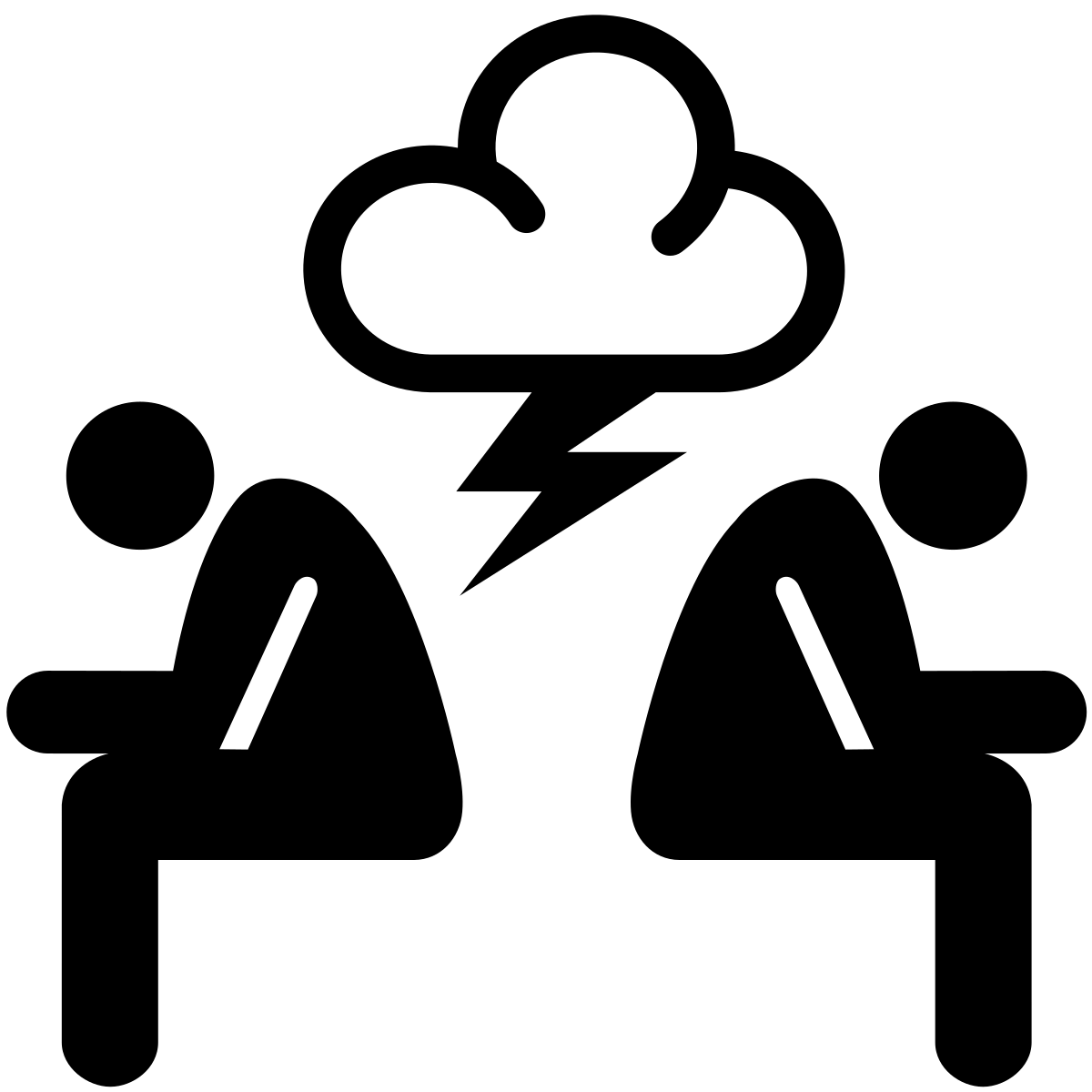
When unresolved hurts stack up, couples slide into blame as the default interpretation. Escaping the grip of resentment is critical. EFT works by moving partners out of secondary emotions like frustration and into the primary affect — the unmet needs and vulnerabilities that make true repair possible.

4. Silent grief — mourning lost connection or shared dreams

It can feel painful to recognize that the future you imagined together has shifted. EFT helps partners access deeper longings, confront the attachment injuries hidden in these losses, and build renewed shared meaning.

5. Intimacy fatigue — love without closeness

Affection is intact, but physical closeness or sex becomes inconsistent or disappears altogether. EFT addresses the emotional blocks underneath sexual disconnection by deepening safety, increasing emotional accessibility, and creating the secure bonding events that support eroticism.

6. Attachment injuries or fear of vulnerability

Some partners learned early that expressing needs leads to rejection; others take pride in never leaning on anyone. EFT reframes these adaptations as attachment strategies and guides partners toward new, safer emotional experiences that update the internal working model.

7. Communication breakdown — the same fight repeating

You talk and talk, but the pattern never changes. EFT maps these trigger points, reorganizes the cycle, and teaches partners how to send clear attachment signals that reshape the entire interaction. f this sounds like you, download this free EFT ebook to get start working on your ‘Demon Dialogues’ right away.

2 Patterns That Don’t Necessarily Mean You Need Therapy

These are the “false alarms”; issues couples often worry signal something serious, but don’t actually require therapy unless they’re part of larger emotional patterns.

  1. Different hobbies or separate interests

You don’t have to do everything together; autonomy is healthy. If the emotional bond is intact, differing interests aren’t a sign of relational threat and could even be the sign of a maturing, strong relationship. Becoming different isn’t the same as the isolating feeling of losing your shared vision of the future.

  1. Occasional conflict or tension

Arguing — even passionately — is normal in securely attached couples. What matters is not whether you fight, but whether you can repair afterward. Good quality arguments help air vulnerabilities, problem solve important issues, and ideally leave the couple feeling closer (even if a short cooling off period is required first). If you argue about different things, rather than arguing about the same thing over and over again, you might be in the clear.

Why EFT Is Especially Suited to These Patterns

There are plenty of couples therapy models offered in Vancouver — Behavioural Couples Therapy, Imago Relationship Therapy, Gottman Method Couples Therapy — so why choose EFT for these emotional patterns?

Because these problems aren’t surface-level communication issues; they’re attachment-driven patterns rooted in isolation, disconnection, emotional misattunement, and the protective coping strategies partners use to survive those feelings. EFT was designed specifically for that terrain.

EFT is attachment-based, grounding every step of therapy in what partners fundamentally need to feel safe and connected. 

It’s experiential, meaning we don’t just talk about your bond — we activate the emotional signals inside the room so they can finally be felt and reorganized. Watch this short clip of Drs Kathrym Rheem and Sue Johnson explaining experiential therapy.

It uses a no–bad-guys framework (see our article) that replaces blame with curiosity and alliance.

Lastly, EFT employs cycle mapping, a structured technique that uncovers the predictable pattern driving your conflicts so you can both finally see it — and stand together against it. Add to that a fifth element: primary emotion access — the ability to move past frustration and shutdown and into the deeper, more honest emotional needs that truly change relationships.

Together, these methods go straight to the core of what keeps couples stuck. EFT doesn’t bury you in homework or scripts or communication drills. It creates, in real time, the emotional experience that has been missing for you and your partner. If this sounds familiar, booking a discovery session is an easy way to learn more.

What to Expect in an EFT Session in Vancouver

Most couples want to know two things before they start therapy: What happens in the room? and Does this actually work?

A typical EFT session is simple enough — you sit together, you talk about what’s been happening between you, and your therapist helps slow everything down so the real feelings underneath can finally get some air. But the words aren’t the secret — your EFT therapist is working both above and below the surface with you, in real time, to give the two of you an emotional experience, not just a classroom teachable experience. 

For many couples, quite profound moments of contact and connection can happen right away, and this can accumulate into lasting change in the relationship somewhere between 8–20 sessions (longer when there’s trauma or infidelity), a timing pattern supported across EFT research and clinics.

But what does success feel like?

At first, it’s small: a conversation that doesn’t spiral; a moment where your partner hears you without getting defensive; the sense that you’re on the same team for once. It’s finishing up and feeling like they actually heard you. Really.

Then something even better shows up.

You start feeling safer with each other — not the “I trust you not to hurt me” kind of safety, but the deeper kind where you can reach for your partner and know they’ll reach back. Arguments feel less like battles and more like puzzles you can solve together. The tension in the house eases. You touch more. You soften around each other. You laugh again. I love hearing these reports from my couples clients, and EFT is so good at what it’s trying to do that I can expect to look forward to them.

This is what EFT is built for. And for many couples, this is exactly the moment where they realize: ‘Right — this is what we’ve been trying to find our way back to.’ 

If you’re in Squamish, North Vancouver or Squamish we highly recommend coming to one of our offices for in person couples counselling. It’s really nice to get a chance do this work in a safe, private, comfortable office. But if you live elsewhere in BC or Canada, or can’t get away from work and kids for that long, or anything else keeps you from coming into our counselling clinics, then you can be reassured that online relationship therapy has the same efficacy as in person work does. 

Is This For Us? — Self-Assessment Questions

Before you decide, take a moment to reflect. Ask yourself and your partner:

  1. Do we feel emotionally distant, even if things “look fine” on the surface?
  2. Are we caught in the same fight over and over?
  3. Do I feel unheard or misunderstood more often than not?
  4. Have resentments settled into our relationship?
  5. Are we avoiding vulnerability, shutting down, or numbing ourselves around each other?
  6. Do parenting or life stressors often spill over into tension between us?
  7. Have trust or attachment injuries made closeness feel risky?
  8. Do we struggle to connect physically or emotionally, even when we love each other?
  9. Are our emotional needs mismatched or unmet, despite our best intentions?
  10. Do we sense something “missing” but can’t quite put our finger on it?

If any of these resonate, your relationship is ready for the kind of support EFT provides. Hundreds of couples in Vancouver — couples like you — have already seen that early intervention is a fun, safe way to clear the cobwebs. 

Why Choose EFT & What to Do Next

EFT works not only for relationships in crisis, but also for those that feel “just okay but dull.” Sometimes the difference between a good relationship and a great one isn’t huge — it’s simply access to a few hours of great experiences.

At Nightingale Counselling, our Granville, North Shore and Squamish locations give couples access to in-person sessions while we can host secure virtual appointments for couples anywhere in BC. Getting started is simple: book a free 15-minute consult, get matched with a therapist trained in EFT, and begin exploring your connection. Our team understands how subtle patterns can quietly erode intimacy — and how quickly therapy can restore it.

Conclusion

The truth is, relationships don’t have to reach a breaking point to benefit from therapy. Sometimes the biggest gains come from noticing a nagging pattern early, and taking steps to strengthen connection before problems grow. Many couples leave feeling immediately lighter, more understood, and able to reconnect. Reflect on your relationship, check for the patterns above, and don’t wait to take action. Talk to each other, talk to a professional, and if it feels right, book a free consultation. Therapy isn’t just for fixing major issues — it’s for growth, maintenance, and rediscovering the joy and intimacy that brought you together in the first place.

FAQ

Is therapy only for major crises?

No. EFT is equally effective for relationships that feel “fine” on the surface but are missing closeness or emotional safety. EFT is a thorough, fully developed therapeutic modality which can address severe, moderate, and low-severity relationship problems. EFT is not designed to return couples to ‘normal’ but to help them achieve extraordinary connection. It’s easy to take the work further, faster if you start before sliding backwards too far.

What if we’re not “bad enough”?

There’s no minimum threshold. Wanting to enjoy your relationship more is all you need. It’s tempting for many people to think your problems don’t ‘deserve’ help and support, but if you think there’s more to life and more to your relationship than you're currently getting, Nightingale therapists can make a meaningful impact no matter where on the spectrum of problems your relationship stands, and early interventions are highly effective.

What if only one partner wants therapy?

EFT accommodates uneven motivation, helping hesitant partners feel safe and engaged without pressure. EFT counsellors are specifically trained to avoid ‘triangulation’ and other therapeutic challenges that can emerge in couples counselling. It’s also not important that both partners have the same ‘skill level’ related to emotional accessibility or language — in fact it’s the norm for one partner to have a higher ‘emotional IQ’ than the other. (What would be the odds of the two of you being the same!?)

How long does it take to see change?

Many couples notice relief in 2–4 sessions, with meaningful restructuring of the bond over 8–20 sessions. Complex trauma or infidelity may extend the timeline. If you’re really ready to get into the weeds and learn more, check out Summary of EFT Research from ICEEFT (the International Centre for Excellence in Emotionally Focused Therapy)

New to Counselling? Start Here.

Starting counselling can come with a lot of questions. Our Starting Counselling Well Guide walks you through what to expect, how to find the right fit, and how to get the most from your first few sessions.

Free to access. No commitment required.

Please wait...

Thank you for signing up!